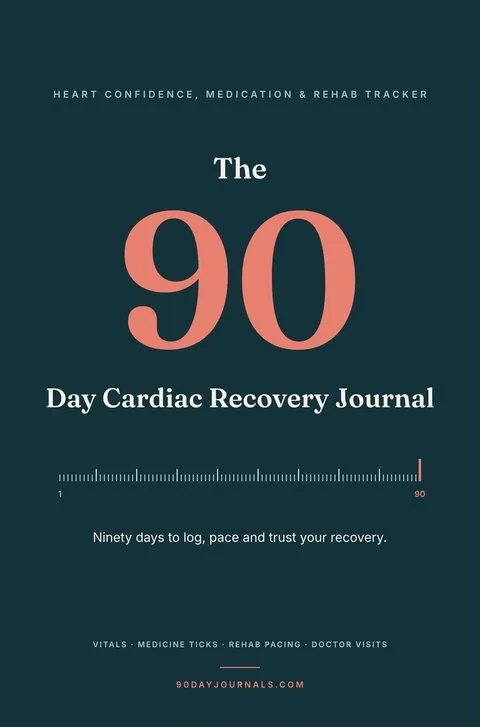
Heart confidence, medication & rehab tracker
The 90 Day Cardiac Recovery Journal
A daily record of numbers, medicines and questions.
Coming soon to Amazon
- 6 x 9 in paperback
- black-and-white interior on white paper
- About 246 pages
Ninety days of numbers, pacing and notes for your care team.
After a heart attack, stent or bypass there is a lot to keep track of. Every day gets a two-page spread: log your blood pressure, heart rate and weight, tick off your doses, note a scary twinge, then record how you moved, ate and felt. It does not replace your doctor. It helps you notice, remember and ask.
What’s inside
- Vitals
- Medicine ticks
- Rehab pacing
- Doctor visits
- Heart profile, care team and a stoplight plan
- A medication card: what each medicine is for, what to watch
- 90 day spreads: vitals, medicine ticks, talk test, daily question
- 13 weekly reviews and doctor visit prep on days 30, 60 and 90
- Look back and Look ahead on day 90
How to use it
Five minutes a day. Honest numbers matter more than perfect days.
-
Before you begin
Fill in the first pages with your doctor or rehab nurse: your heart profile, care team, stoplight plan and medication card. You do this once and use it for all 90 days.
-
Through the day
Left page, morning to night: sleep (1 poor, 5 great), blood pressure, heart rate, weight, side effects, and a tick for each time of day a medicine is due. Missed a dose? Leave that box empty and name it in your note for the doctor.
-
If you feel something
Tightness, pressure or a flutter with breathlessness or faintness: call your local emergency number first, log it afterwards. Not sure? Treat it as an emergency. Other twinges: log them for your doctor.
-
Every evening
Right page: how you moved, the talk test, what you ate, how you felt, and your answer to the day’s question.
-
Every seven days
The weekly review adds up your week: blood pressure, weight change, medicines taken and minutes moved. Bring the trend to your appointments.
-
Day 30, 60 and 90
Before each cardiologist visit, fill in the visit pages: your numbers, side effects and your three most important questions. On day 90, look back and look ahead.
A clear record for your next appointment.
The health journals keep a neutral record for you and your care team: what you measured, what you took, how the day went. The closing pages gather the ninety days into a summary to take with you.
They give no medical advice, no doses and no target values. Anything that is a limit or an instruction is a blank for you to fill in with what your own care team told you.
Already have the journal?
Register your Day 1 and get your printable card. One page to print and fill in by hand. It goes on the fridge, so you and everyone at home know the next step without having to look it up.
Register your start date