Why a weekly review works: looking back every seventh day
One day on paper says little. A weekly review puts seven days side by side. What to write, how long it takes, and how to turn it into one small change.
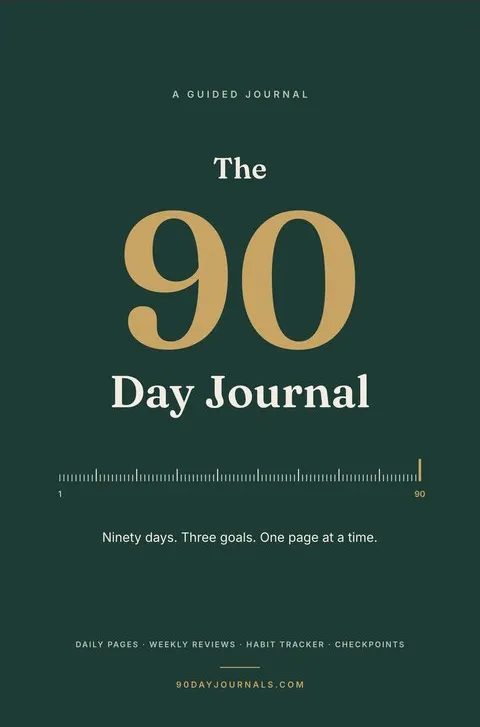
Most of us judge a week by how Friday felt. A weekly review is a small habit that replaces that feeling with something you can read. Every seventh day you stop, read what you wrote, and decide one thing to do differently. It does not need to take long, and it is built into 22 of the 24 journals in the 90 Day Journals series.
A week is a good size to look at
One day on paper tells you very little. You slept badly, a meeting ran long, or everything went right for no reason you can name. Judging from a single day is guesswork.
Seven days side by side show more. You can see which days were full and which were light, which habits held on weekdays and slipped on the weekend, and which obstacle came up more than once. A week is also short enough to remember. You can still recall what happened on Tuesday.
That is the common-sense case for the review: it is a short enough look back to be accurate, and it comes round often enough to change something while it still matters.
What the review asks for
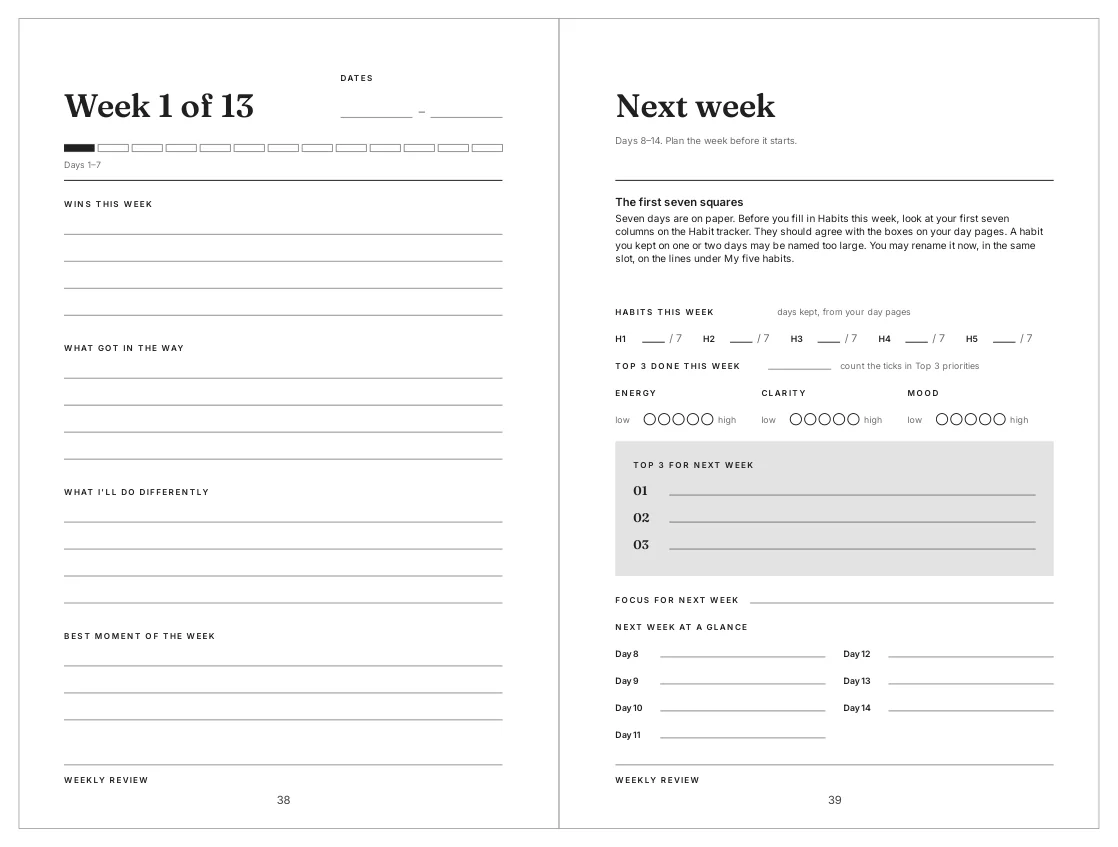
In The 90 Day Journal, the weekly review takes two pages after every seventh day. You write:
- Wins this week, and your best moment.
- What got in the way.
- What I’ll do differently.
- Habit days out of seven, and how many of your top-three priorities you finished.
- Energy, clarity and mood for the week.
- Top 3 and a focus for the week ahead.
There are thirteen reviews in the book. Each right-hand page prints the coming week’s days, so planning the next seven days is part of the same sitting.
Other journals ask for what fits their purpose. The 90-Day Quarter Sprint review asks what counted most, which time-waster to cut, and your numbers, and you plot two dots on a scoreboard. The 90 Day Dream to Reality Journal adds up a courage count and your minutes, keeps your best evidence, and sets three brave steps for the week ahead.
How to write one
A few habits make the review easier:
- Read before you write. Turn back through the last seven evening pages. Summarize what is there, not what you remember.
- Count, then comment. Tick-box totals first, such as habit days and priorities done. Words second.
- Keep each answer short. One honest line beats a paragraph you will not reread.
- End with the plan. The review is useful only if next week’s top three are written down before you close the book.
The journal’s own weekly notes suggest small exercises for particular weeks. In week 2, look only at the Top 3 lines of the last seven days and find any priority you wrote more than once and never ticked. It may be too big for one day, or it may not be a priority after all. In week 3, read the One win line from every evening so far, in one sitting, and notice what kind of thing you count as a win.
One small adjustment
The point of looking back is to change something, and the change should be small. “What I’ll do differently” has only a few lines, and that is a good size. Pick one thing:
- Move a task to a time of day when you have more energy.
- Split a priority that never gets ticked into a first step.
- Drop a habit that has become a chore, or rename one that was too big.
Then see what the next review says. If the change helped, keep it. If not, you have one more data point and a fresh page.
If you miss the review
You may reach day 8 without having done it. The journal’s guide says the pages other than the day pages can be used out of order, so a review a day late is still a review. Read the pages, fill it in, and carry on.
What a review does not do
It does not grade you. A low week is information, not a verdict, and a blank day only means you did not write. It also does not replace advice from professionals when your journal is about health. In the health journals, any limit or instruction is a blank for you to fill in with what your own care team told you.
If you are choosing a journal for this habit, start with the one that matches what you want to keep track of. All of them are 6 x 9 in paperbacks, sold on Amazon (listings coming soon).